
|
Getting your Trinity Audio player ready...
|
BTS are not just returning to the stage.
They are returning to the heart of Korean history.
On March 21, 2026, BTS will hold their first full-group comeback concert since completing mandatory military service. The venue is Gwanghwamun Square, one of Seoul’s most symbolic landmarks. The event, titled “BTS Comeback Live: Arirang,” will mark the release of the group’s fifth full-length album Arirang, scheduled to drop a day earlier on March 20.
This is not a typical comeback show.
It is a cultural statement.
With a free live audience in Seoul and a global livestream on Netflix across 190 countries, BTS are placing their return at the intersection of music, heritage, and global pop culture.
Why Gwanghwamun Square Matters for BTS’ Comeback
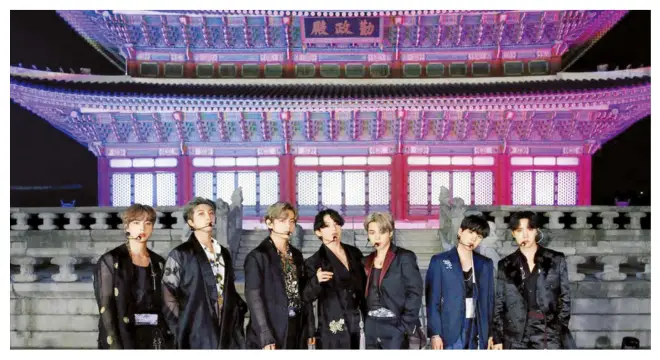
Gwanghwamun Square is not a random open space chosen for capacity or aesthetics. It sits directly in front of Gyeongbokgung Palace, the main royal palace of the Joseon Dynasty (1392–1910). For centuries, this area symbolized state authority, public communication, and national identity.
The square underwent major restoration in recent years, including the return of the Woldae, a ceremonial stone platform historically used by kings to address the public. That platform disappeared during the Japanese colonial period and was restored in 2023 after nearly 100 years.
By staging their comeback here, BTS are aligning their return with a space that represents continuity, restoration, and dialogue with the people.
This choice fits the moment. BTS are coming back as a full group after a long pause. Korea is showcasing restored heritage sites to the world. The timing feels deliberate, not decorative.
Walking the “King’s Road”: A Symbolic Opening
According to reports from Yonhap News, The Korea Herald, and JoongAng Ilbo, the concert’s opening sequence may feature BTS walking through the historic route connecting Geunjeongmun Gate, Heungnyemun Gate, and Gwanghwamun Gate before ascending the Woldae.
Historically, this route was known as the “King’s Road.”
Only the king used the slightly raised central path. Officials and guards walked on the sides.
If this sequence takes place as planned—whether live or partially pre-recorded—it will visually connect BTS’ return with a royal procession. The symbolism is obvious, but it does not feel forced. Korean media and cultural historians have framed it as a metaphor for public communication, not self-coronation.
BTS are not claiming kingship.
They are walking a path built for leaders who addressed their people directly.
“Arirang”: The Album Title That Anchors the Concept
The album title Arirang carries deep cultural weight in Korea. The folk song “Arirang” is often described as Korea’s unofficial national anthem. It expresses themes of love, separation, longing, resilience, and reunion.
These themes align closely with BTS’ recent history.
The group paused full-team activities in 2022 due to military service. During that time, each member pursued solo projects. They reunited as a group in mid-2025, and Arirang becomes their first full album since that separation.
According to BigHit Music, the album contains 14 new tracks that reflect BTS’ identity, emotional distance, and reconnection. The label has emphasized that the album focuses on universal emotions rather than spectacle.
That approach matches the comeback stage’s historical setting. The concept relies on meaning first, visuals second.
Netflix’s First Live Solo Concert Stream: Why This Is Big
Netflix will livestream “BTS Comeback Live: Arirang” globally. This marks the first time Netflix has live-streamed a solo concert by a single artist.
Netflix confirmed the broadcast will reach 190 countries and up to 300 million users, according to statements reported by international outlets including BBC, Reuters, and AFP.
The platform has streamed large events before, such as Super Bowl halftime shows. However, this project goes further. Netflix is also co-directing the concert with HYBE.
The director is Hamish Hamilton, known for directing multiple Super Bowl halftime shows, the London Olympics opening ceremony, and major award shows including the Grammys and Oscars.
This collaboration signals trust. Netflix is not treating BTS as just another music act. It is treating the comeback as a global cultural broadcast, similar in scale to international sporting or ceremonial events.
More Than a Concert: The Documentary Factor
Netflix will release a documentary titled “BTS: The Return” on March 27, just days after the concert.
The film is directed by Bao Nguyen, an Emmy-nominated filmmaker who has worked extensively on music and cultural documentaries for Netflix. The documentary follows BTS during the 3 years and 9 months leading up to their full-group comeback.
Netflix has described the film as an intimate look at the group’s internal process—how they questioned their direction, rebuilt creative trust, and decided how to move forward together.
This matters for credibility.
The comeback is not presented as effortless or glossy. It acknowledges uncertainty, which strengthens audience trust.
Live Audience, Crowd Control, and Safety Planning
The concert will be free, with ticket reservations expected through Weverse, HYBE’s official fan platform.
Seoul city officials have stated that around 15,000 people will be accommodated inside Gwanghwamun Square, with additional 13,000 viewers watching via large screens at Seoul Plaza near City Hall. These numbers may change depending on final safety approvals.
Authorities estimate that up to 200,000 people could gather in surrounding areas. Because of this, the Seoul Metropolitan Government has requested detailed crowd control, traffic management, and cultural heritage protection plans before granting final approval.
This cautious approach reflects lessons learned from past large-scale public events in Seoul. The goal is to balance global exposure with public safety and heritage preservation.
The Economic Impact: Seoul Is Already Feeling It
The so-called “BTS effect” is visible weeks before the concert.
According to hotel industry data reported by The Korea Herald , hotels near Gwanghwamun, Myeong-dong, and Jongno have reached full occupancy for March 21. Some accommodation prices increased significantly due to demand.
Retailers, department stores, and duty-free shops have announced BTS-related promotions for international visitors. Seoul officials have also stated they will monitor price inflation and prevent unfair price hikes.
Tourism experts believe the concert could accelerate Korea’s push toward surpassing 20 million annual foreign visitors, a goal the country narrowly missed last year.
This impact is not theoretical. It is already happening.
Why This Comeback Stage Is Different From Previous BTS Concerts
BTS have performed at iconic venues before—stadiums, award shows, and even palace grounds. What makes the Gwanghwamun comeback stage different is intent.
This event combines:
- A historic public space
- A culturally symbolic album
- A free offline concert
- A global Netflix livestream
- A documentary that explains the process
Few artists attempt all of this at once. Even fewer succeed.
The concept avoids excess. It does not rely on pyrotechnics to justify its scale. Instead, it relies on context—history, timing, and emotional alignment.
A Cultural Moment, Not Just a Fan Event
It would be easy to label this comeback as a fan celebration. That would miss the point.
Korean scholars and tourism experts have framed the event as a soft-power milestone. It presents Korean culture through music, architecture, storytelling, and modern media—all in one broadcast.
For international viewers, this may be their first live exposure to Gwanghwamun’s historical significance. For Korean viewers, it reframes a familiar space through contemporary culture.
That dual audience approach is rare. It requires careful planning, which explains the extended approval process and institutional involvement.
Final Thoughts: BTS’ Return Is About Continuity
BTS’ comeback stage at Gwanghwamun is not about proving relevance.
It is about continuity.
The group did not disappear. They paused, evolved, and returned with intention. By choosing a venue tied to communication between leadership and the public, BTS are framing their return as a conversation, not a victory lap.
On March 21, millions will watch BTS walk a path once reserved for kings. Not because they claim that title, but because they understand what the path represents.
History does not stay frozen.
Sometimes, it sings.