
|
Getting your Trinity Audio player ready...
|
K-dramas have a way of making places feel personal. A quiet palace corridor, a bridge at sunset, or a busy shopping street suddenly becomes memorable because a scene unfolded there. Over time, K-drama filming locations in Seoul have become more than just visual backdrops—they have become an essential part of the storytelling.
What makes this even more special is that many of these K-drama filming locations are real, public places. They are not closed sets or recreated attractions. They are locations where people live, study, work, and relax every day. That is why visiting them feels authentic rather than staged.
This guide explores the most recognisable K-drama filming locations in Seoul, organised clearly to help travellers plan realistically.
Key Takeaways
- Seoul is one of the most frequently used real-world filming cities in K-dramas, offering a mix of historical sites, modern landmarks, parks, and neighbourhood streets.
- Most K-drama filming locations in Seoul are publicly accessible, including palaces, riverside parks, universities, and city landmarks, making them easy to include in a real travel itinerary.
- Locations such as Gyeongbokgung Palace, N Seoul Tower, Han River parks, and Dongdaemun Design Plaza are not set replicas but functioning public spaces used daily by locals.
- Government-supported tourism bodies like the Korea Tourism Organization (KTO) and Visit Seoul actively promote filming locations as part of cultural tourism, helping preserve sites while allowing visitor access.
- Visiting filming locations does not require guided tours in most cases, as Seoul’s public transport system connects nearly all major sites efficiently.
- Respecting local guidelines is important, especially in residential areas like Bukchon Hanok Village and active university campuses.
- Planning visits around seasons improves the experience, with spring and autumn offering the most comfortable weather and natural scenery.
Why Seoul Appears So Often in K-Dramas
Seoul offers filmmakers something rare: contrast. Within a short distance, you can find royal palaces from the Joseon Dynasty, modern architectural landmarks, peaceful riverside parks, and energetic neighbourhoods filled with cafés and nightlife.
According to the Korea Tourism Organization (KTO) and Visit Seoul, many filming locations remain open to the public to support cultural tourism. This long-term accessibility allows fans to experience filming sites without disrupting daily life or heritage preservation.
In simple terms, Seoul works on camera because it already tells stories visually –no heavy set design required.
Historical and Traditional K-Drama Filming Locations
Gyeongbokgung Palace
Built in 1395, Gyeongbokgung Palace is the largest and most important royal palace in Seoul. It has appeared in historical and fantasy dramas such as The King: Eternal Monarch, Kingdom, and Moon Embracing the Sun.
The palace is managed by the Cultural Heritage Administration of Korea, ensuring accurate preservation and public access. Visitors can walk through courtyards, gates, and halls that appear exactly as they do on screen. Wearing a hanbok allows free entry, a long-standing cultural policy rather than a tourist gimmick.
Bukchon Hanok Village
Located between Gyeongbokgung and Changdeokgung Palaces, Bukchon Hanok Village features traditional Korean houses known as hanok. Dramas such as Goblin, Personal Taste, and The Heirs used its narrow alleys for emotionally quiet scenes.
Bukchon remains a residential area, not an open-air museum. Visitors are encouraged to respect noise restrictions and privacy. This balance between real life and cinematic beauty is what makes the location feel genuine.
Deoksugung Stone Wall Road
This scenic walking path appears in dramas like Goblin and One Spring Night. The long stone wall, seasonal trees, and slow pace make it a popular choice for reflective or romantic scenes.
Spring and autumn offer the most visually striking atmosphere, both on screen and in person.
Iconic City Landmarks Seen in K-Dramas
N Seoul Tower (Namsan Tower)
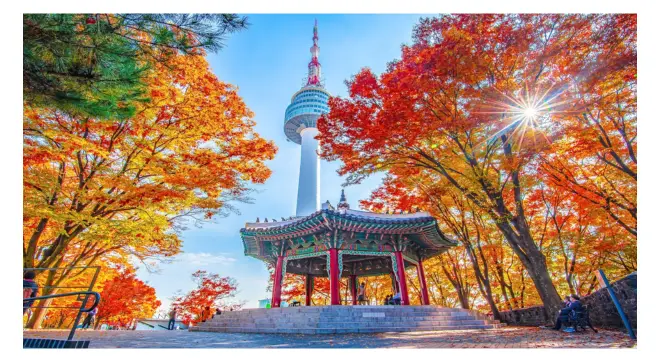
Few landmarks are as closely associated with K-dramas as N Seoul Tower. It appears in Boys Over Flowers, My Love From the Star, and Itaewon Class, often during confession or turning-point scenes.
Located on Namsan Mountain, the tower provides panoramic views of the city. The “love locks” area is popular with couples, and its use in dramas reflects an existing cultural trend rather than a fictional concept.
Dongdaemun Design Plaza (DDP)
Designed by architect Zaha Hadid, DDP represents Seoul’s modern identity. Its futuristic curves and open spaces appear in dramas such as My Love From the Stars and The Producers.
The plaza is publicly accessible and frequently hosts exhibitions, fashion events, and night lighting displays. Filmmakers favour it for contemporary and creative storylines.
Lotte World
Lotte World is one of the most frequently filmed theme parks in Korea. It appears in dramas like Business Proposal and True Beauty, often as a date location.
The park is fully operational and popular with locals, which explains why scenes filmed here feel lively rather than staged. Renting school uniforms inside the park is a common cultural trend, not a drama invention.
Parks, Rivers, and Outdoor Filming Locations
Han River (Hangang)
The Han River is one of Seoul’s most recognisable natural landmarks. Parks such as Yeouido Hangang Park appear in dramas like What’s Wrong With Secretary Kim and Vincenzo.
Scenes filmed here often involve conversations, personal reflection, or emotional turning points. In real life, locals picnic, cycle, and enjoy takeaway food along the river, making it one of the city’s most lived-in filming locations.
Cheonggyecheon Stream
Cheonggyecheon is an 11-kilometre urban stream that runs through central Seoul. Dramas such as True Beauty and City Hunter use it for calm walking scenes and quiet conversations.
Despite being located downtown, the stream feels removed from traffic and noise, which is why it works so well on camera.
Universities and School Drama Locations
Yonsei University
Yonsei University is one of South Korea’s most prestigious private universities. Its gothic-style architecture appears in dramas like Snowdrop, Reply 1994, and IRIS.
The campus remains active, so visitors should follow university guidelines. Autumn is particularly popular due to seasonal foliage, which often enhances filming visuals.
Ewha Womans University
Featured in The Heirs, Ewha’s campus combines modern architecture with landscaped open spaces. It is one of the most visually distinctive university campuses in Seoul.
As with other campuses, visits should respect academic schedules and restricted areas.
K-Drama Districts and Neighbourhoods
Itaewon
Itaewon gained international recognition after the Itaewon Class. Known for its multicultural atmosphere, cafés, and nightlife, the district reflects a more global side of Seoul.
Many filming locations from the drama remain accessible, and the neighbourhood continues to evolve without losing its character.
Myeongdong
Myeongdong frequently appears in dramas portraying fast-paced city life, including The Heirs. It is known for shopping, street food, and pedestrian-friendly streets.
For visitors, it offers easy access and a lively environment, especially in the evening.
Streets, Bridges, and Lesser-Known Filming Spots
Noksapyeong Bridge
This bridge became iconic after its appearance in Itaewon Class. The elevated view of the city skyline makes it a visually strong filming location.
It is open to pedestrians and popular for photography.
Sinchon Area
Sinchon’s tunnels, stairs, and side streets appear in youth-focused dramas. The area surrounds several universities, which explains its frequent use for student-life storylines.
The locations feel natural because they are part of everyday routines rather than designated attractions.
Theme Parks Featured in K-Dramas
Seoul Land
Seoul Land appears in dramas like Strong Woman Do Bong Soon. Compared to larger parks, it offers a calmer atmosphere while still providing classic amusement-park visuals.
It is located just outside central Seoul and remains easily accessible by public transport.
Closed or Special-Mention Locations
Hotel Seine (Ikseon-dong)
Hotel Seine, a café used in Hotel Del Luna, permanently closed in 2022. While visitors can no longer enter, it remains relevant as part of the drama’s filming history.
Including closed locations helps set realistic expectations for travellers.
Planning a K-Drama Filming Location Visit in Seoul
Seoul’s subway system connects most filming locations efficiently. Spring and autumn are generally considered the best seasons due to mild weather and natural scenery.
For accurate and updated information, travellers should rely on official sources:
- Korea Tourism Organization (visitkorea.or.kr)
- Visit Seoul (visitseoul.net)
- Cultural Heritage Administration of Korea
These organisations provide verified details on access, preservation, and visitor guidelines.
 Join Our WhatsApp Channel
Final Thoughts
K-drama filming locations in Seoul are not designed attractions created for fans. They are real places woven into the city’s daily life. That authenticity is what makes visiting them meaningful.
Walking through a palace courtyard or crossing a familiar bridge does not feel like stepping onto a set. It feels like stepping into Seoul itself—quietly, naturally, and without the background music.